Cartographers
Brettspielwelt GmbHBoard
4.090.00 Reviews
- Version
- 1.9.4
- Installs
- 10.00K
- Age Rating
- Everyone
Screenshots
Our Review of Cartographers
 Analysis by Appyee
I like board games that give me room to think without turning a short break into a rules seminar. Cartographers hits that balance by asking me to build a map from terrain shapes while chasing scoring goals. It’s a thoughtful fit for a phone or tablet when I want a compact puzzle, though it suits patient players more than anyone looking for a fast, reflex-driven game.
A good fit for a quiet break—or a deliberate game night
The easiest way to approach a session is to treat each terrain placement as a small planning problem: fit the available shape onto the map, then consider how it serves the objectives. That makes the game useful in two different settings. On my own, I can take my time weighing options; with friends, the same choices become a contest in which everyone is trying to make the most of the cards and their own map.
For example, I might open it while waiting for an appointment and play a solo round rather than start a game that needs a long uninterrupted evening. The appeal is that each decision has a visible result on the map, so the session feels purposeful even when I’m playing by myself. If I have a group ready to compete, multiplayer offers a more social alternative—but it shifts the mood from private puzzle-solving to watching how other players handle the same kind of pressure.
What to consider before choosing it
This is a board game from Brettspielwelt GmbH, based on the Roll Player universe. It was released on August 18, 2020, and version 1.9.4 is the current version. The game costs $4.99, with in-app purchases listed at $1.99 per item, so I’d think of it as a paid game rather than a free distraction. It’s rated Everyone and requires Android 7.0 or later.
The audience numbers suggest it has found a modest but real following: it has over 10,000 installs, a 4.0 average rating from 753 ratings, and 90 written reviews. It was also an Expert Game of the Year nominee. I wouldn’t use any one of those details as a substitute for deciding whether its particular mix of drawing, planning, and chance is for me, but together they offer some context for a game that isn’t trying to be a mass-market action hit.
Before spending money, I’d ask myself whether I enjoy visual planning and adapting to changing options. Someone who likes making a tidy grid, finding combinations, and improving a result through careful choices is likely to get more from it than someone who wants direct control over every outcome. The card draws can narrow the options in ways I wouldn’t have chosen, so a perfect-plan mindset may lead to frustration. I see that as the central trade-off: the game asks me to respond creatively, not simply execute a fixed strategy.
Crafting Your World, One Square at a Time
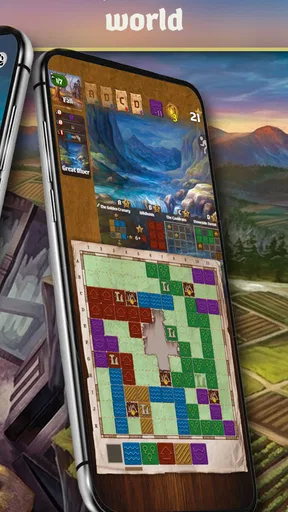
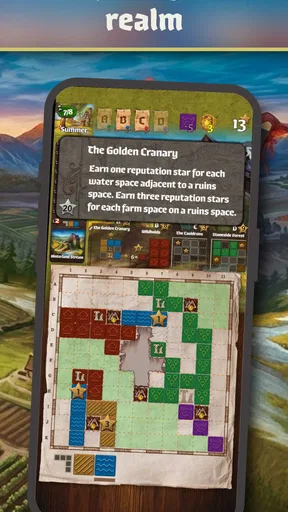
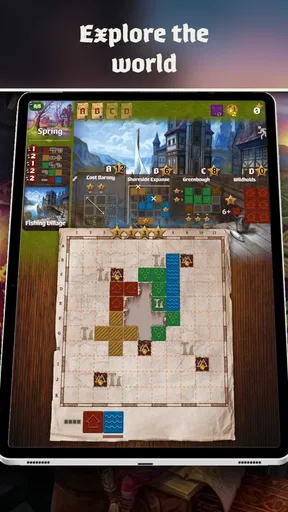
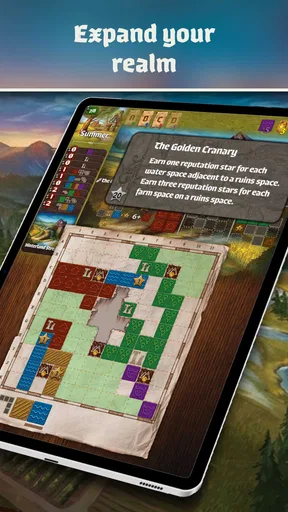
At its core, Cartographers is all about charting out lands on a grid map, and it’s as satisfying as it sounds. You’re tasked with drawing terrain types—forests, villages, water bodies, and more—on your map to score points based on how well you meet specific objectives. Sounds simple? Well, that’s where the strategy kicks in.
The game cleverly introduces a card-drawing mechanic that dictates what kind of terrain you can place and in what shape. This twist keeps you on your toes and makes every session feel fresh and challenging. You can almost feel the gears turning in your brain as you decide the best placement for each piece. Trust me, it’s as addictive as a good puzzle.
Visuals and Vibes
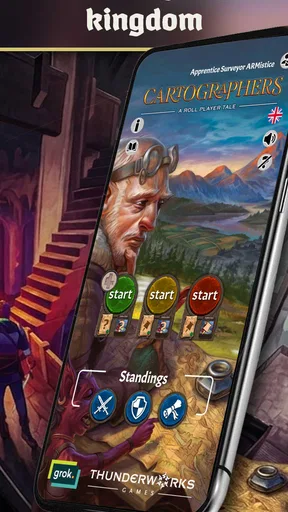
One of the first things that struck me about Cartographers is its charming, minimalist design. The graphics are crisp and colorful, making it easy to distinguish between different terrain types. The game’s interface is intuitive, which means you spend less time fumbling around and more time crafting your masterpiece. Plus, the soothing soundtrack is a nice touch—it’s like a gentle nudge that keeps you in the zone.
I have to highlight the aesthetics here because they contribute so much to the overall experience. The maps you create are not just functional; they’re genuinely beautiful. By the end of a round, you’ve not only completed a game but also crafted a piece of art. How cool is that?
Multiplayer Mayhem or Solo Serenity?
What’s great about Cartographers is its versatility. You can dive into a solo game if you’re looking for a bit of peace and quiet, perfect for those moments when you just want to zone out and immerse yourself in map-making. But if you’re feeling competitive, the multiplayer mode is where things get spicy.
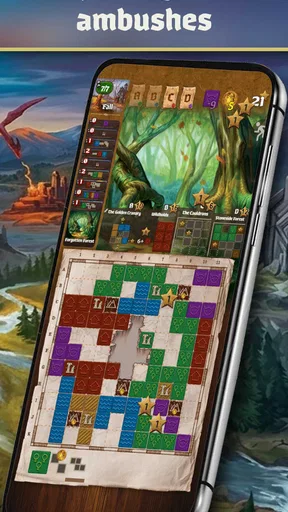
In multiplayer, you’re not just working against the objectives—you’re working against other players. This adds a layer of excitement as you try to outsmart your opponents. The game even throws in some curveballs with the inclusion of ambush cards, where players can mess with each other’s maps. It’s a bit of chaos that keeps everyone on their toes.
Practical habits that improve each map
I get more consistent results when I look at the scoring objectives before committing to a large shape. A tempting placement can fill an awkward gap, but it may also make later scoring combinations harder to arrange. I try to keep a few useful spaces open rather than treating every turn as a chance to cover as much ground as possible. That small habit matters because the map is both a drawing surface and the record of my decisions.
When a card offers a shape that doesn’t fit my preferred plan, I don’t spend too long wishing for a different draw. I check whether it can serve a secondary objective or sit along an edge without blocking a more valuable area. This is one of the game’s best lessons: a flexible plan survives random draws better than a beautiful plan with no alternatives. I also find it useful to pause before placing a shape and mentally test its orientation against the spaces I may want to use later.
For multiplayer, I’d keep the competitive mood light if the group is new to the game. Ambush cards can make the shared session more lively, but they also mean a carefully arranged map may be disrupted. Players who enjoy direct interaction will probably welcome that jolt; players who want a calm, parallel puzzle may prefer solo play. Knowing which mood the group wants makes a bigger difference than trying to treat every session as a serious contest.
How it differs from familiar board-game choices
Compared with a word game or a quick matching game, this asks for spatial planning rather than vocabulary or rapid pattern recognition. Compared with a traditional tabletop session, the phone format makes it easier to pick up for a solo round without laying out a physical map and pieces. The trade-off is that a screen can make the finished map feel less tactile than drawing on paper, and players who enjoy handling components may still prefer the tabletop experience.
It also occupies a different space from a pure digital puzzle with one clearly correct answer. Here, the goals and card draws encourage adaptation, and the pleasure comes from making a workable map rather than solving a single fixed riddle. That makes it appealing when I want replayable decisions, but less ideal if I’m looking for a tightly scripted campaign or a story-led adventure. Its Roll Player connection gives it a board-game identity, yet the central attraction is the map-building puzzle itself.
Where the learning curve and randomness show
The first session can feel busier than the clean grid suggests. I have to understand how the terrain shapes relate to objectives and remember that a placement can help one goal while making another harder. New players may benefit from taking a slower first round and focusing on legal, sensible placements before trying to optimize every point. Once the basic rhythm clicks, the challenge becomes less about handling the interface and more about making trade-offs.
Random card draws remain a genuine limitation for anyone who wants full control. A poor fit can force a compromise, and multiplayer ambushes add another source of disruption. I don’t think that makes the game unfair by default; it does mean that careful planning can’t guarantee a perfect result. If I’m in the mood for a deterministic logic puzzle, I’d choose something else. If I want to practice adapting and still feel that my decisions matter, the uncertainty works in the game’s favor.
The app’s minimalist look helps me read the terrain at a glance, but it also means the experience depends on enjoying the map-making itself. Players who need a busy interface, a strong narrative, or constant new spectacle may find the presentation too restrained. I’d also separate the purchase decision from the presence of optional in-app purchases: the $4.99 entry price is the main commitment to weigh, and the listed $1.99-per-item purchases are an additional consideration rather than a reason to assume every player needs them.
A Few Last Thoughts
While Cartographers is generally smooth sailing, it does have its quirks. Some players might find the initial learning curve a bit steep, especially if you’re not used to strategic board games. But honestly, after a couple of rounds, you’ll be mapping like a pro.
Another thing worth mentioning is the game’s reliance on randomness due to the card draws, which might not be everyone’s cup of tea. However, I found that this unpredictability is part of what makes each game exciting and unique.
In conclusion, if you’re on the hunt for a game that combines strategy, creativity, and a dash of friendly competition, Cartographers is definitely worth checking out. It’s a game that rewards planning and creativity, all wrapped up in a beautiful package that’s hard to resist. So, grab your map, draw those lines, and see where your adventures take you!
Verdict
Strengths of Cartographers
- Intuitive interface for easy navigation.
- Diverse map styles boost creativity.
- Offline mode enhances usability.
- Regular updates with new features.
- Engaging tutorials for beginners.
Limitations of Cartographers
- Requires large storage space.
- No social sharing options.
- Limited export formats available.
- Occasional performance lags.
- In-app purchases can be pricey.
Similar Picks in This Category
View All
Ludo King®
Gametion4.1

Ludo
Yarsa Games4.6

Tile Master® - Matching Game
Higgs Studio3.6

Checkers Online
CC Games4.6

Dominoes
Loop Games4.7

Chess
Chess Prince4.6
Frequently Asked Questions
What is Cartographers, and how does it work?
Cartographers is a strategic map-drawing game where players take on the role of royal cartographers tasked with charting new territories. The game involves drawing shapes on a grid to create territories, while earning points based on specific goals and avoiding monsters. It combines puzzle elements with strategy, offering a unique and engaging gameplay experience.
Is Cartographers available for both Android and iOS devices?
Yes, Cartographers is available for download on both Android and iOS platforms. You can find it on the Google Play Store for Android devices and the Apple App Store for iOS devices. The game is optimized for both smartphones and tablets, ensuring a seamless experience across devices.
Does Cartographers require an internet connection to play?
Cartographers can be played offline, making it perfect for on-the-go gaming without the need for an internet connection. However, certain features, such as updates or multiplayer modes, might require internet access to function fully. Check the app’s store page for more details on connectivity requirements.
Are there any in-app purchases or ads in Cartographers?
Cartographers offers a premium gaming experience with no intrusive ads. While the base game provides plenty of content, there are optional in-app purchases available for those looking to expand their gameplay with additional content or features. These purchases are entirely optional and not necessary to enjoy the core game.
What age group is Cartographers suitable for?
Cartographers is designed to be enjoyed by players aged 10 and up. The game’s strategic elements and puzzle-solving aspects make it suitable for both younger players and adults. Its family-friendly nature makes it a great choice for family game nights or educational purposes to enhance strategic thinking and creativity.
Play our best games!


